STRONG ROOTS INITIATIVE
STRONG ROOTS INITIATIVE
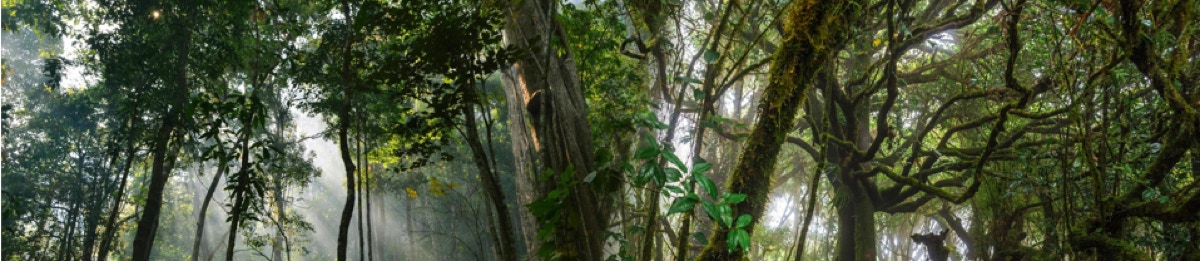
New Growth 2036
Background
Forests in western Washington are suffering as the climate continues to warm and precipitation regimes change. In the Pacific Northwest (PNW), old-growth forests like the one in Washougal, WA have seen significant changes for years, such as dieback of Thuja plicata (Western Redcedar), Pseudotsuga menziesii (Douglas fir), and Conium maculatum (Hemlock).
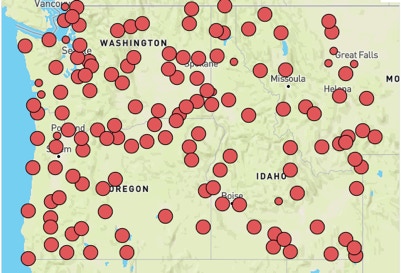
Summer warming trends are observable from all stations in western WA, using the University of Washington Climate Trend Analysis application. Red color and sizes of circles show statistical significance of temperature increases from 1980 to 2023. Within this same application, summer temperatures in Vancouver, WA (nearest to Washougal) have increased by 8% during this same time period.
Figure 1: Warming Trends.
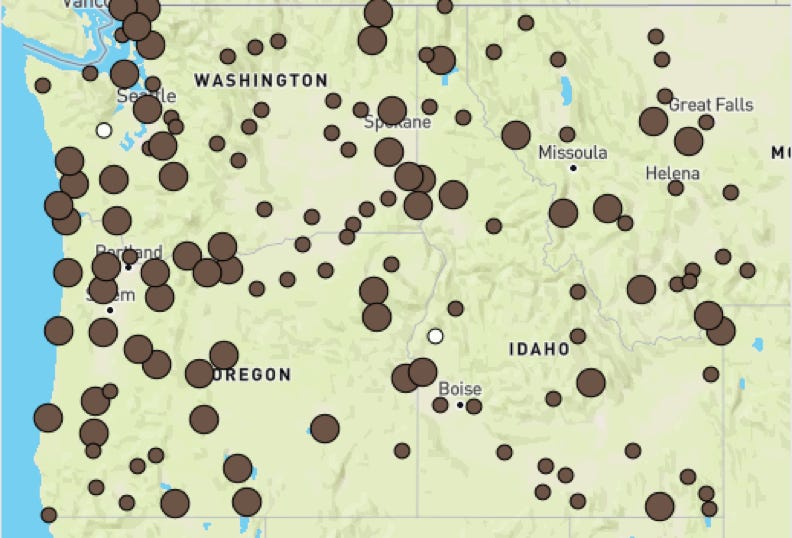
Summer precipitation trends are also observable in all stations within western Washington. Brown color represents decreases in summer precipitation from 1980-2023, with sizes of circles representing the statistical significant of these drought conditions. Within this same time period, the Vancouver, WA station has recorded a 24.5% decrease in average summer precipitation.
Figure 2: Reduced Precipitation.
Taking Action
The stress of climate change is noticeable everywhere. In Washougal, WA - a section near the Columbia River Gorge, along one of the river’s main tributaries (Washougal River) - drought, hotter summers, and other stressors have been causing severe dieback. The canopy of this pristine patch of old-growth forest (predominantly Western Redcedar, Douglas fir, and Hemlock) was in need of help. In collaboration with forest geneticists, the Washington Farm Forestry Program, professional foresters from Cascade Woodland Design, and private PNW landowners, the Strong Roots Initiative took action to ensure the resilience of the forest for future generations.
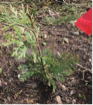
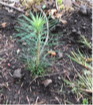
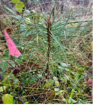
Using proven assisted species migration practices advised by professionals, we planted hundreds of Giant Sequoia, Lodgepole Pine, and Aromatic Cedar seedlings to ensure the long-term viability of the forest. Tolerant of drier conditions and resistant to local wildlife, these seedlings are currently thriving (photos from October, 2024) and are actively benefitting from assisted migration within acres of Washougal’s old-growth forest. As the canopy of Douglas fir and Western Redcedar suffer, these seedlings offer a vibrant, hopeful future despite the overwhelming velocity of climate change.
Today, you can participate in forest sustainability and help assisted species migration by adopting and tracking one of these “greenie” seedlings within the New Growth 2036 project. You can even visit and care for your seedling, and track the progress within this beautiful patch of PNW forest firsthand. Claim an active role in ensuring the viability of U.S. forests in response to climate change.
Information and Resources for Forest Landowners
Over forty percent (40%) of PNW forest, and 56% of forest land in the U.S. is owned privately by citizens, with the majority being held by individual families and non-corporate owners. As a forest landowner, your actions make a significant difference in the sustainability of U.S. forests. You can adopt assisted migration, and other important actions to ensure the viability of your forest and combat the effects of climate change.
The USDA encourages forest landowners to develop a stewardship plan that defines objectives for your forest. Consider how climate change may affect those objectives, and plan for multiple generations. If planting trees, we have resources to help you determine which species and seed sources, and where to get seedlings. We have listed several resources for forest landowners to connect with other forest owners, forestry staff, and forestry professionals with valuable knowledge and experience that can help you find research-based solutions, identify nurseries and find sources of seeds and seedlings from alternative zones that can be used for assisted migration. You can also contact us for further information. We would love to have you join our initiative, and even feature your project as another success story in assisted migration!
For landowners within the PNW, please see the USDA’s Climate Resilience Guide for Forest Landowners in Western Washington for valuable information, and reach out to Washington Department of Natural Resources stewardship foresters, who can help you achieve your goals and sustainably manage your forest.
Additionally, the USDA’s Forest Stewardship Program (FSP) of the U.S. Forest Service connects private landowners with the information and tools they need to manage their forests and woodlands.
All landowners can implement practices that remove carbon dioxide from the atmosphere and store it as organic carbon. Your forest can literally help reduce emissions of carbon dioxide that cause climate change. Click here for more information about the carbon cycle.
According to the US Forest Service, over half (~56%) of forest land in the US is owned privately by citizens.